

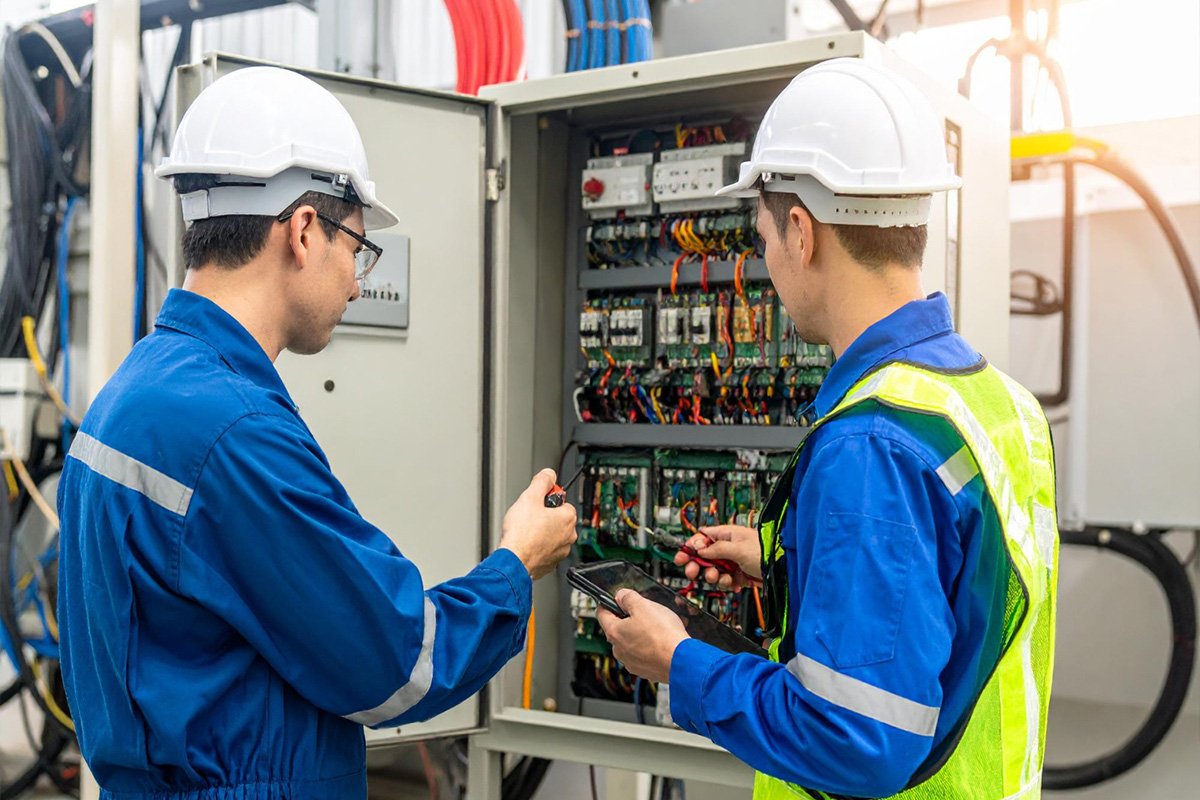
An industrial electrician installs, maintains, tests and repairs electrical systems that keep factories, warehouses, processing plants and large commercial sites running. The work goes well beyond household wiring: think three-phase power, motor controls, switchboards, safety systems, instrumentation and fault-finding on equipment where downtime costs real money. For businesses looking for an Industrial Electrician Sydney teams can rely on, the right sparkie helps prevent breakdowns, keeps staff safe, and supports compliance.
What makes industrial electrical work different?
Industrial sites use bigger loads, more complex control gear, and tougher environments (dust, vibration, heat, washdown areas, moving plant). That changes the job in a few key ways:
- Higher capacity systems: industrial and many commercial sites commonly run three-phase distribution and heavy-duty switchboards.
- Controls and automation: electricians may work around motor starters, VSDs (variable speed drives), sensors, relays and PLC-adjacent wiring.
- Safety-first isolation: shutting down and verifying equipment is safe to work on is a core part of the process. SafeWork NSW guidance highlights strict requirements around isolation and restrictions on live electrical work.
- Compliance pressure: installations must align with Australian standards and wiring rules used to design and verify installations (commonly referenced as AS/NZS 3000 Wiring Rules).
What industrial electricians do day to day
Competitors ranking on page one tend to list similar responsibilities—installation/maintenance, fault-finding, and safety + teamwork—but they often stop short of explaining what that looks like on a real site and how a business should choose the right contractor.
Here’s the practical breakdown.
1) Install and upgrade power distribution
Industrial electricians install and upgrade the infrastructure that feeds machines safely and reliably, including:
- switchboards and sub-boards
- circuit protection (RCDs where required, breakers, fuses)
- cable trays, conduit, and industrial-grade wiring
- isolators and emergency stop circuits (where part of the system design)
If you’re expanding production, adding new equipment, or moving a line, distribution needs to be reviewed so you don’t end up with nuisance trips, overheating, or voltage drop issues.
2) Keep three-phase equipment running
A lot of industrial equipment—compressors, pumps, conveyors, HVAC, hoists—relies on three-phase power. In Sydney, it’s common for sites to need:
- new three-phase connections for added plant
- load balancing and capacity checks
- upgrades when older boards can’t safely support new demand
Brian Brothers Electrical already covers 3-Phase Power and Load Balancing and Electrical Capacity Assessment as service offerings, which fits neatly with common industrial needs.
3) Fault-finding and breakdown response
When a machine stops, the job becomes equal parts electrical knowledge and methodical diagnosis. Industrial electricians typically:
- test circuits and components (e.g., using meters and insulation testing where appropriate)
- trace faults through control wiring and interlocks
- identify failed components (contactors, overloads, sensors, drives, relays)
- restore service safely and document what was done
Competitor guides frequently list “fault finding” as a key task, but the business takeaway is this: good fault-finding reduces repeat failures, not just today’s downtime.
4) Preventative maintenance that avoids expensive surprises
Preventative maintenance is where industrial electricians quietly save businesses money. Typical tasks include:
- thermal checks/inspection of switchboards (where part of a planned program)
- tightening terminations and checking for heat damage
- testing safety switches and verifying protective devices
- inspecting cables and mechanical protection in high-wear areas
- reviewing plant isolations and labelling
Competitor content strongly leans on “regular checkups” and “scheduled maintenance” for good reason industrial systems rarely fail at convenient times.
5) Safety and compliance on high-risk sites
Industrial electrical work must be done with serious respect for safety systems and legal duties. In NSW:
- you need the right licence to perform electrical wiring work
- live work is heavily restricted, and isolation processes matter
A capable Industrial electrician will plan isolations, coordinate with supervisors, use lockout/tagout practices where required, and ensure the site is left safe, labelled and compliant.
Where industrial electricians work in Sydney
In Sydney and Greater Sydney, industrial electricians are commonly called into:
- manufacturing and fabrication workshops
- warehouses and distribution centres
- food production and cold rooms
- strata and large commercial buildings with plant rooms
- construction sites during fit-out and commissioning
If your site has frequent trips, equipment overheating, nuisance shutdowns, or you’re adding new machinery, that’s usually a sign it’s time to bring in an Industrial Electrician Sydney businesses can depend on.
How to choose the right industrial electrician (without guesswork)
Use this shortlist when comparing contractors:
- Licensing and credentials: confirm they’re appropriately licensed for NSW electrical work.
- Industrial experience: ask what types of sites they regularly service (warehouses, factories, plant rooms, etc.).
- Clear scope + reporting: you want notes on what failed, why it failed (if known), and what should be monitored.
- Capability for bigger electrical work: if your site touches the network side of electrical supply, you may need an Accredited Service Provider (ASP) Level 2 electrician for certain tasks. Brian Brothers Electrical promotes Level 2 ASP capability across Sydney.
- Response options: breakdowns don’t wait for business hours. Brian Brothers Electrical advertises 24/7 emergency electrical services across Sydney.
Common jobs a Sydney industrial electrician gets called for
- switchboard repairs and replacements
- three-phase upgrades and new circuits for machinery
- fault-finding on tripping equipment and intermittent shutdowns
- safety switch issues and compliance checks
- metering work and supply-side services (where required)
- data cabling and comms for modern sites that rely on networks
Brian Brothers Electrical lists services including Commercial Electrical Services, Switchboard Repairs and Replacements, Metering Services, and Network Data Cabling—all relevant for industrial and large commercial environments.
Next step for Sydney businesses
If your site is expanding, experiencing downtime, or you’re unsure whether your current electrical capacity is keeping up, it’s worth booking a site visit and getting a clear plan—especially for three-phase loads, switchboard condition, and protection suitability. For urgent faults, a 24/7 team can make the difference between a short interruption and a long production delay.
FAQ:
Can industrial electrical work be DIY on a business site?
No. Electrical wiring work in NSW requires the right licence, and unsafe work can put people and operations at risk.
Why do machines keep tripping breakers?
Common causes include overload, failing components, moisture ingress, damaged cables, incorrect protection settings, or undersized circuits. A proper diagnostic approach matters more than swapping parts.
When do you need an ASP Level 2 electrician in Sydney?
When the job involves certain connections/disconnections and other network-related work. If you’re unsure, ask your electrician early—Brian Brothers Electrical promotes Level 2 ASP services across Ausgrid and Endeavour Energy areas.