

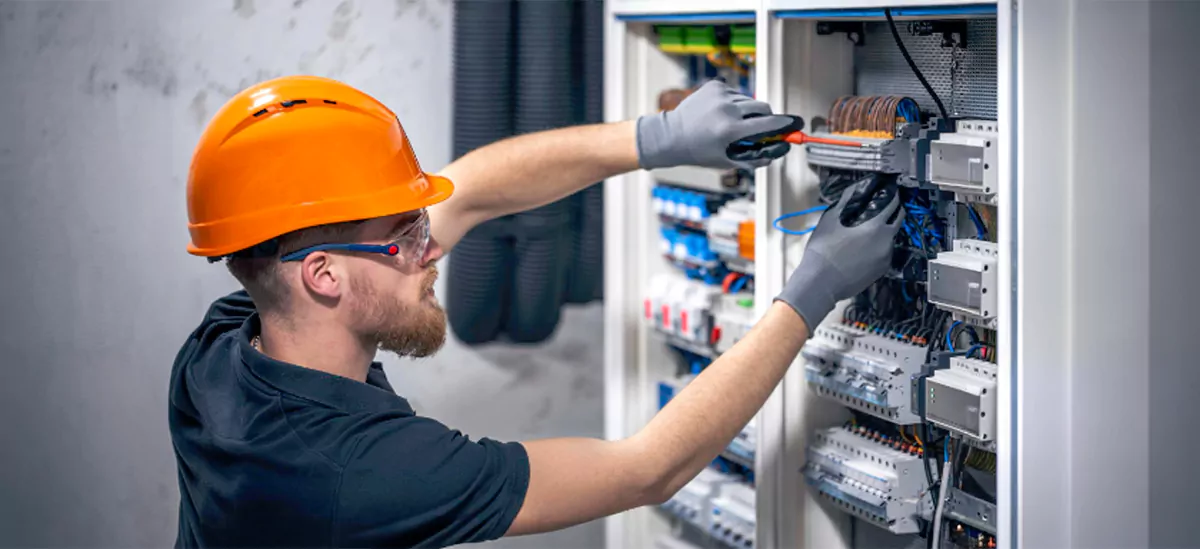
The switchboard is the part of your home you probably never look at. It’s tucked away in a cupboard, the laundry, or on an external wall, doing its job quietly until something goes wrong. But as Sydney homes age and household electrical loads grow, more and more switchboards are being asked to do work they were never designed for.
This article breaks down what a switchboard upgrade actually involves, the signs that yours needs attention, the safety risks of leaving it too long, and the factors that influence the cost of the job in Sydney.
What Is a Switchboard Upgrade?
Your switchboard is the central hub for power flowing through your property. It takes the supply from the network, runs it through circuit breakers (or older fuses), and distributes power to every circuit in the home.
A switchboard upgrade replaces outdated components with modern ones. That usually includes:
- New circuit breakers (MCBs) in place of old rewireable fuses
- Safety switches (RCDs) on every circuit
- A new main switch and proper earth bonding
- A clean, compliant board that meets current Australian standards
In some cases the upgrade is partial, like adding RCDs to an existing board. In others it’s a full replacement of the enclosure, busbar, and all internal components.
Signs You Need a Switchboard Upgrade
A failing switchboard usually gives warning before things get serious. Watch for:
- Ceramic rewireable fuses. If you still have old porcelain plug-in fuses, your board is well overdue for replacement.
- No safety switches. Boards installed before the late 1990s often skip RCDs on lighting and power circuits, or have none at all.
- Frequent tripping. Breakers that trip regularly, or fuses that blow often, point to an overloaded board or a fault in the system.
- Burning smell or scorch marks. Any sign of heat damage inside the meter box needs immediate attention.
- Asbestos backing. Common in homes built up to the late 1980s. The black or grey backing board itself is the problem.
- Crowded board with no spare slots. Renovations, air conditioning, or EV chargers may need new circuits there’s no room for.
- Buzzing or crackling sounds coming from inside the cabinet.
If any of these apply, get a licensed electrician to check the board before the next storm or heatwave puts more pressure on it.
Safety Risks of an Outdated Switchboard
Old switchboards are responsible for a real share of Sydney’s electrical fires. The risks fall into a few categories.
Fire. Loose terminations, overheated busbars, and aged insulation all create heat. Ceramic fuses don’t trip fast enough during a sustained overload, which means cables can smoulder for a long time before the fault clears.
Electric shock. Without RCDs, a faulty appliance or damaged cord can deliver a serious shock to anyone who touches it. Modern safety switches cut the power within milliseconds.
Insurance and compliance. If a fire starts at an old, non-compliant board, insurers may have questions. Boards with asbestos or unsafe wiring also flag up during sale, lease, or rental compliance checks.
Power quality. Old boards struggle with modern loads. Lights flicker when the kettle boils, the air con trips on hot days, and sensitive electronics get hammered by voltage dips.
The fix for all of these is the same: bring the board up to current standard with a safety switch upgrade and modern circuit protection.
What’s Involved in a Switchboard Upgrade
A typical switchboard upgrade in Sydney follows a clear process:
- Inspection and quote. The electrician checks the existing board, the wiring entering it, and the loads on the property to confirm whether a partial upgrade or full replacement is the right call.
- Power off. The supply is shut down for the duration of the work. Most upgrades are done within a day, though larger jobs can take longer.
- Removal of the old board. Old fuses, busbar, and any asbestos backing are removed and disposed of safely.
- New board installation. The new enclosure is mounted, fitted with breakers, RCDs, and a main switch, then wired up to the existing circuits.
- Testing and certification. Every circuit is tested and a Certificate of Compliance for Electrical Work (CCEW) is issued.
- Power back on. The board is energised, RCDs are tested, and the system is ready to use.
If your meter or consumer mains also need work, that part has to be done by a Level 2 electrician and coordinated with the network distributor.
What Affects the Cost of a Switchboard Upgrade in Sydney
Switchboard upgrade costs in Sydney vary widely because no two boards are the same. The main factors include:
- Size of the board. A small unit with four or five circuits costs less to replace than a 20-circuit board for a large home.
- Single phase vs three phase. Three phase installations involve more components and more labour.
- Asbestos backing. Removal must be carried out by certified workers and adds time and disposal costs.
- Cable condition. If the wiring entering the board is brittle or too short, extra repairs are needed before the new board can be connected safely.
- Meter and consumer mains work. Older Sydney homes sometimes need new mains or an updated meter at the same time, both of which involve a Level 2 electrician.
- Location and access. Boards in tight cupboards, high on walls, or in awkward spots take longer to work on.
- Capacity upgrade. Properties moving from 60-amp to 80- or 100-amp service may need a load assessment and additional works.
The most accurate guide is an on-site quote from an electrician who can see exactly what’s behind the existing cover. Online ballpark figures rarely capture what’s actually involved.
Why Upgrade Now Rather Than Later
Modern Sydney households run far more on their wiring than homes did 30 years ago. Ducted air conditioning, induction cooktops, EV chargers, pool pumps, and home offices all add up. An old switchboard that worked fine in 1995 will struggle today.
Beyond capacity, the safety upgrade alone is worth the work. A properly equipped board with safety switches on every circuit dramatically reduces fire and shock risk. Insurers and real estate agents also flag old boards during sale and rental inspections, so an upgrade smooths out paperwork down the line.
Brian Brothers Electrical handles switchboard upgrades for homes and businesses across Sydney, from older inner-city cottages to newer suburbs in the west and north.
Conclusion
Switchboard upgrades aren’t glamorous work, but they’re one of the most important investments a Sydney homeowner can make. A modern board with safety switches and correctly sized breakers protects against fires, prevents shocks, supports modern electrical loads, and keeps you on the right side of compliance.
If your home still runs on ceramic fuses, has no safety switches, or trips constantly under normal loads, it’s time to book an inspection.